Close


You’ve just bought the fabric of your dreams from Marché Saint Pierre, or your favorite fabric store, and you already know exactly what you’re going to sew…
Once you’re back home, you have only one desire:
RUSH TO YOUR SCISSORS and to YOUR SEWING MACHINE, itching to bring your vision to life…
It’s often that burst of excitement at the beginning — or simply pure desire, even for a more experienced seamstress

And just as planned, you bring your dream garment to life…
So far, so good.
Then you wash your garment for the very first time vous êtes amenée à laver

Fortunately, nothing went wrong this time…
Why?
If residual pigments remain after the initial wash, they can cause the fabric to release color.
Due to the type of fiber: :
Synthetic fibers (like polyester or nylon) rarely shrink — unless blended — unlike natural fibers such as cotton, wool, or linen, which are especially sensitive to heat and humidity.
Due to the tension of fibers during manufacturing: :
When a fabric is woven or knitted, the fibers are often stretched. Washing can relax them, causing the fabric to “return” to its original — and smaller — size.
Due to high temperature: :
Hot water and high-temperature drying can cause fiber contraction, especially in garments made of wool or cotton.
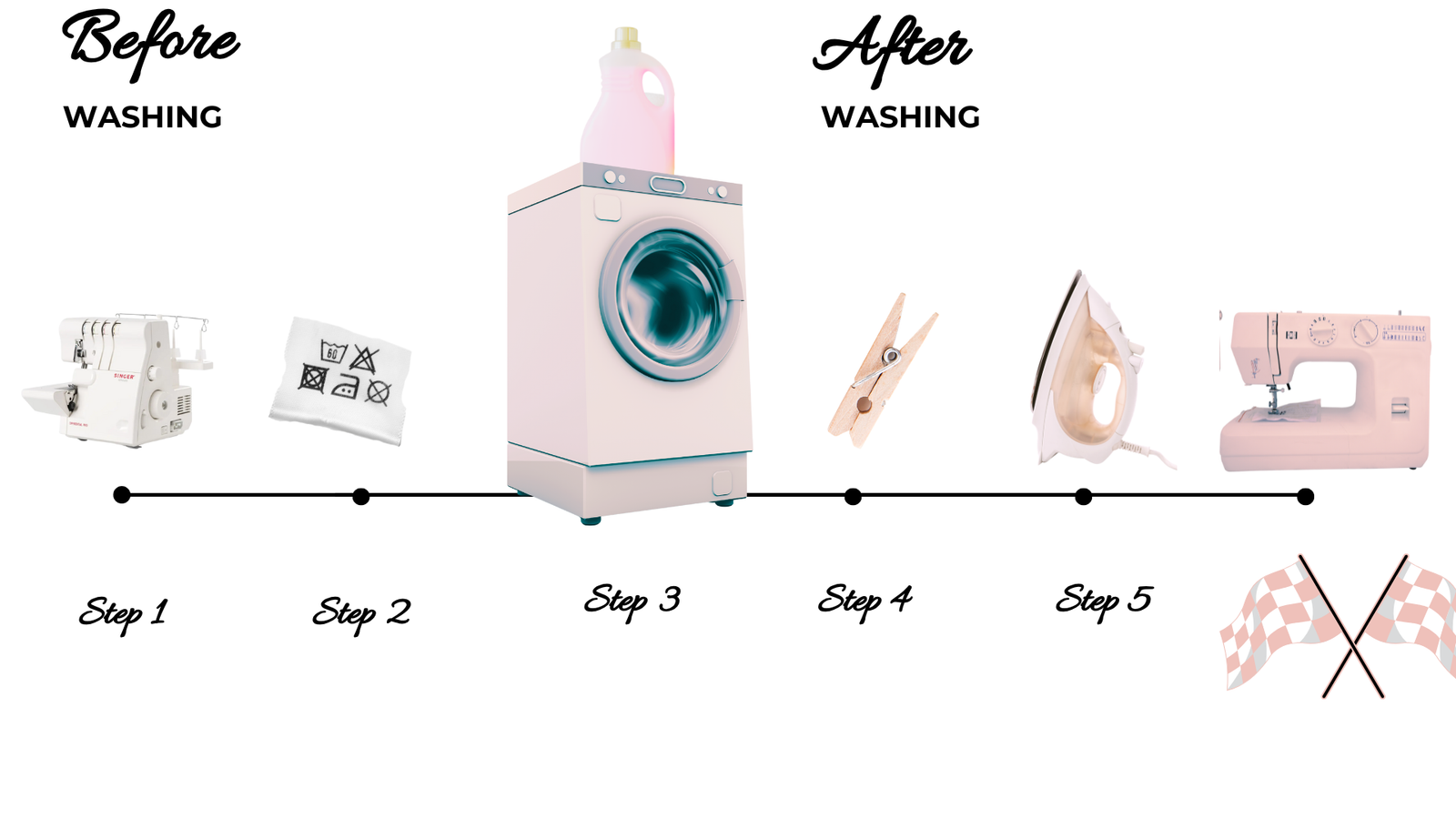
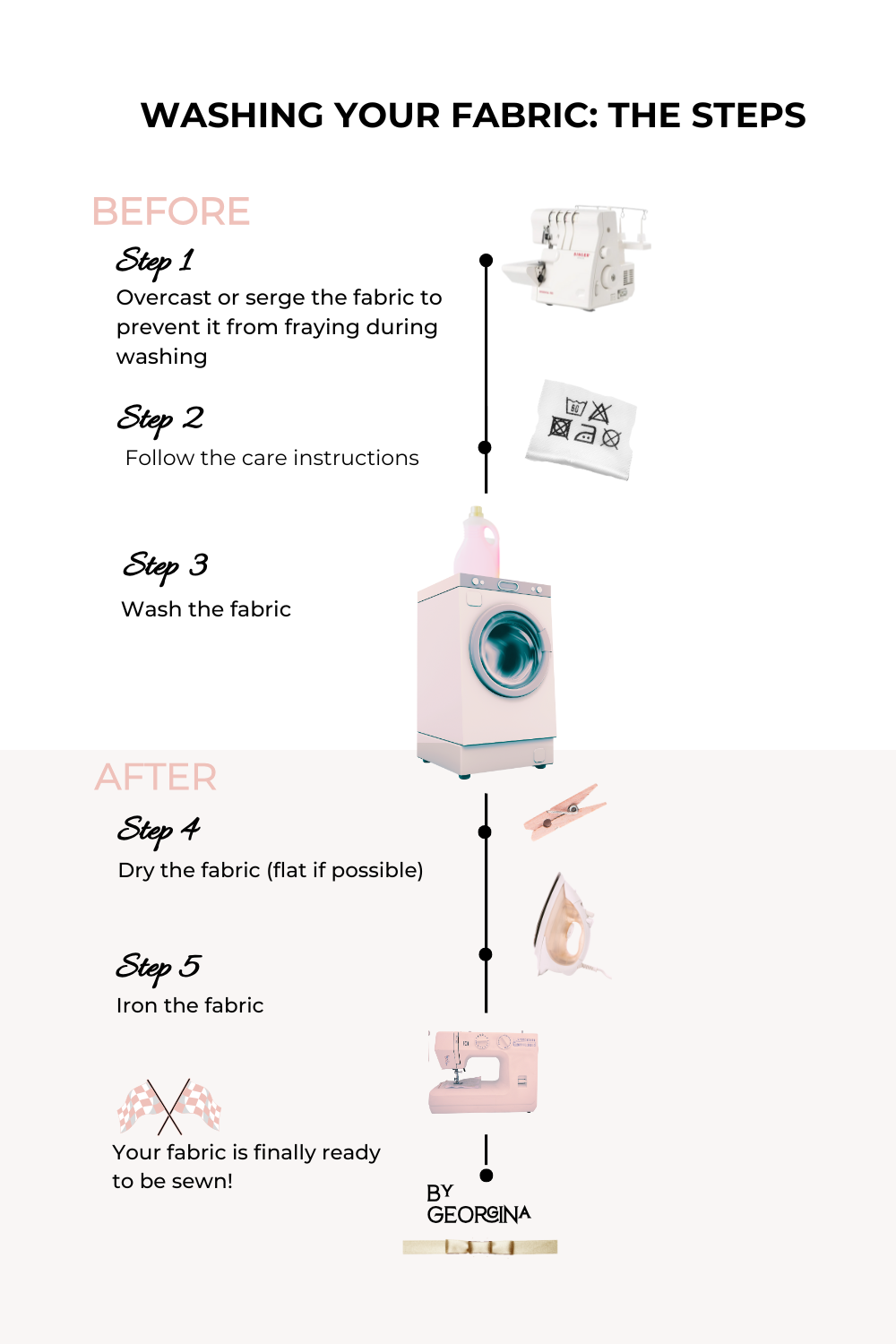
It’s best to finish the edges of your fabric using a sewing machine or a serger to prevent fraying during washing.
A fabric remnant rarely comes with a care label
So don’t forget to ask in-store about the composition of your fabric, and be sure to inquire about how to care for or wash it — especially if it’s a specialty fabric.
You’re now ready to wash your fabric!
Lay the fabric flat to dry, if possible.
Press the fabric.
our fabric is now ready for the next step — pinning, cutting, or going straight to the sewing machine depending on your project…
Usually…

Haberdashery pieces should also be pre-washed before sewing.

If you’d prefer not to wash the whole fabric, you can take a small swatch to test instead.
Measure the fabric first, then check its size afterward.
If there’s no visible change, you can safely skip washing the fabric.
From my Pinterest...
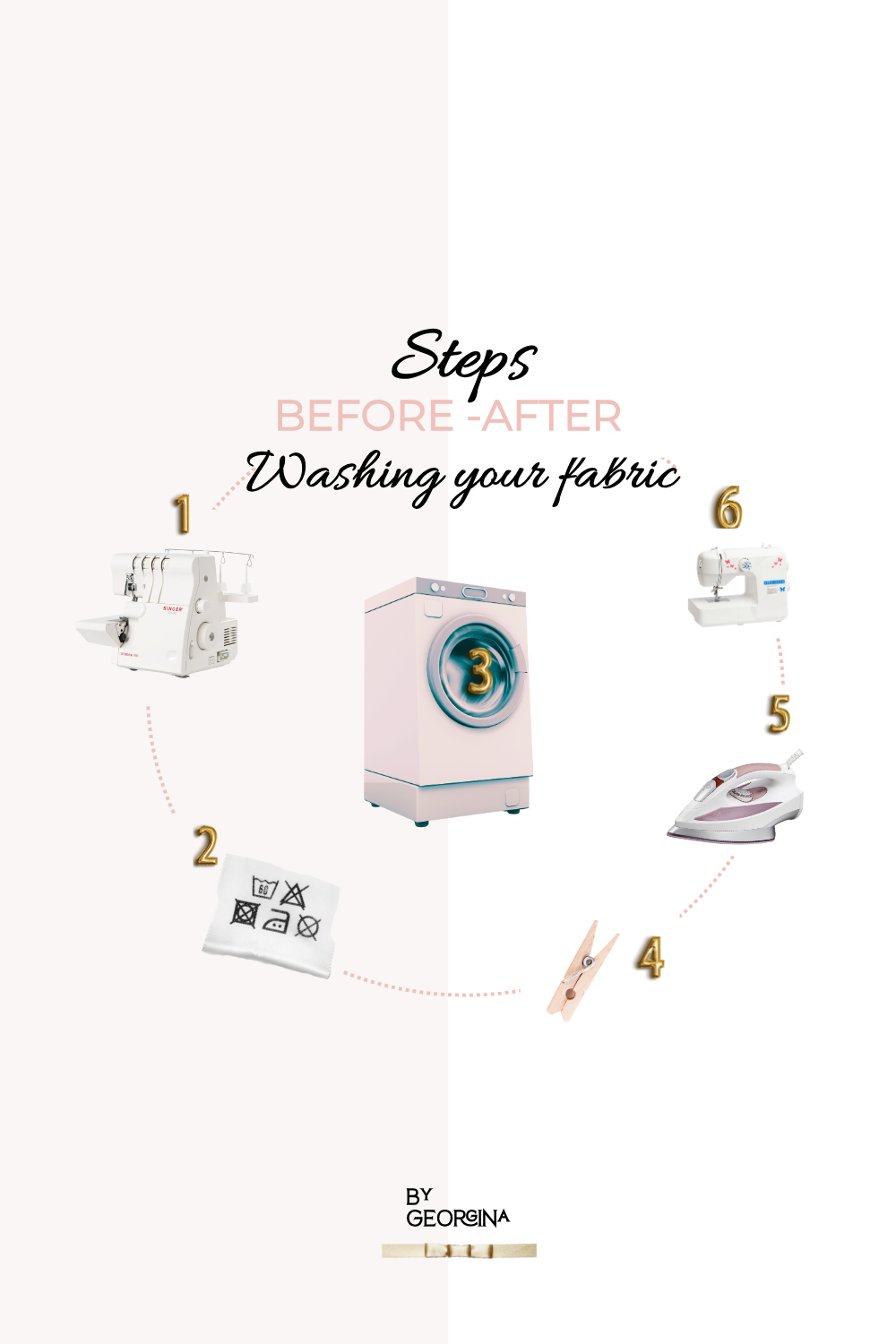
The recap visuals:

In the next episode...